
The Complete Guide to Buying an Outdoor Sauna in Canada
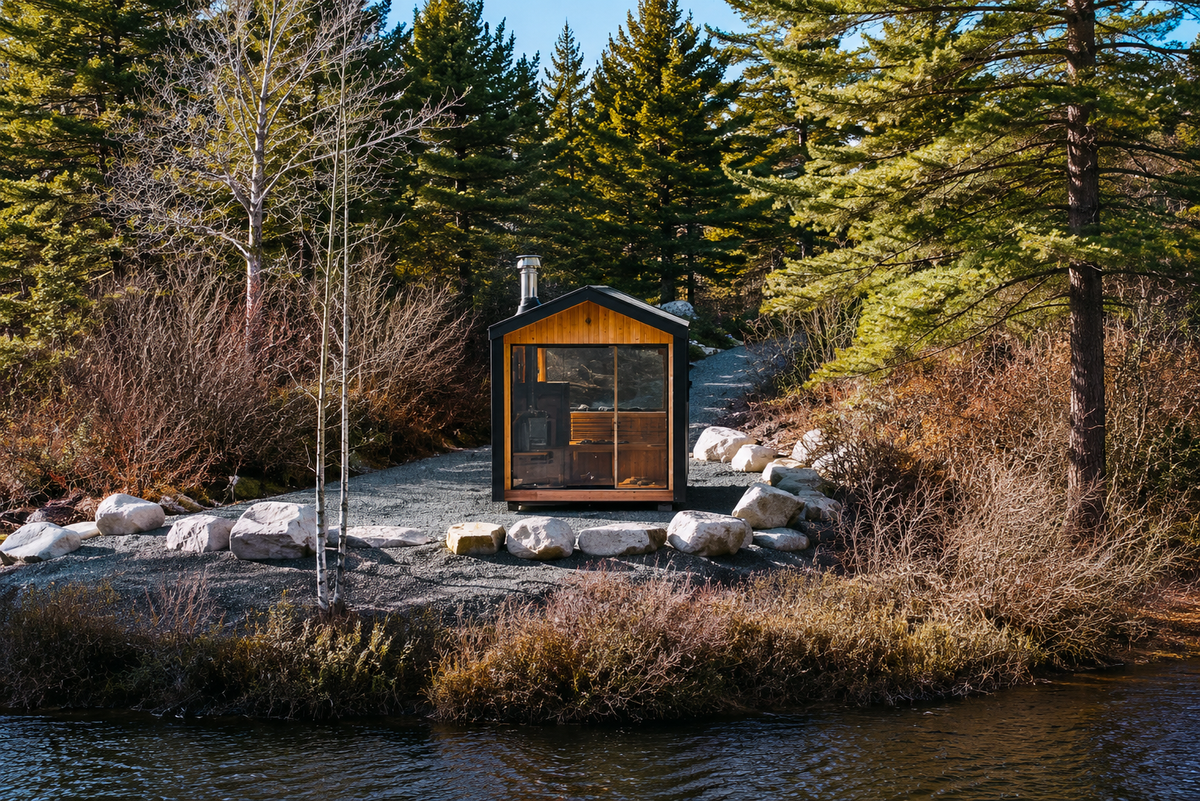
Buying an outdoor sauna is a major investment, especially in Canada where the sauna needs to deal with freezing temperatures, snow, moisture and large seasonal temperature changes.
That makes choosing the right sauna about much more than appearance.
You need to think about size, construction, wood type, insulation, heater capacity, electrical requirements, foundation, delivery, installation and long-term maintenance.
This guide covers the most important things Canadians should consider before purchasing an outdoor sauna.
1. Start With How You Will Actually Use the Sauna
Before comparing materials or heaters, think about how the sauna will fit into your lifestyle.
Ask yourself:
• How many people will normally use it?
• Do you want space for guests?
• Will you use it mainly after workouts or for relaxation?
• Do you want to lie down on the bench?
• Will it be used year-round?
• Do you want a changing area or vestibule?
• How much backyard space do you realistically have?
It can be tempting to buy the largest sauna you can fit, but larger is not automatically better.
A larger sauna requires more space and may require greater heater capacity, so the best size is the one that fits your actual use.
2. How Much Does an Outdoor Sauna Cost in Canada?
There is no single useful price for an outdoor sauna because the final cost depends on what is included.
When comparing outdoor sauna prices in Canada, look beyond the advertised sauna price and consider the entire installed project.
Your total budget may include:
• Sauna structure
• Heater
• Heater controls
• Sauna stones
• Foundation or base preparation
• Electrical work
• Wood-burning stove and chimney components if applicable
• Delivery or freight
• Crane or equipment access where required
• Assembly or installation
• Permits and inspections where applicable
• Accessories and upgrades
• Ongoing exterior maintenance
This is why two saunas with very different advertised prices may not actually be as far apart once the complete installation is considered.
Before buying, ask for a clear explanation of exactly what is and is not included.
3. Choose the Right Sauna Size
Sauna size affects more than seating capacity.
The internal volume is also one of the key factors used to determine the required heater output.
Harvia states that sauna volume and construction should be considered when selecting heater power, with approximately 1 kW per cubic metre used as a general starting point before adjustments are made for glass and other non-insulated surfaces.
This means a larger sauna usually requires a more powerful heating system.
When comparing models, look at:
• Interior dimensions
• Bench width and length
• Number of usable seating positions
• Headroom
• Door position
• Heater location
• Whether the layout still feels comfortable when fully occupied
A good floor plan can sometimes be more valuable than simply having more exterior square footage.
4. Cedar vs. Thermowood: Which Is Better?
Both Western Red Cedar and thermally modified wood are commonly associated with premium sauna construction, but they achieve their performance characteristics in different ways.
Western Red Cedar
The Western Red Cedar Lumber Association describes Western Red Cedar as naturally stable and resistant to rot and decay, with low shrinkage and good performance in high-moisture environments.
Those qualities help explain why cedar has such a long history in sauna construction.
Cedar also offers:
• A distinctive natural aroma
• Warm natural colour
• Good dimensional stability
• Natural resistance to decay
• A traditional North American sauna appearance
Thermowood
Thermowood is real wood that has been thermally modified using controlled heat and steam.
Thermory states that this process improves properties including dimensional stability, durability and resistance to moisture-related movement without relying on chemical treatment during the thermal-modification process.
Depending on the species and product, thermally modified woods can provide:
• Improved dimensional stability
• Reduced moisture absorption compared with the untreated wood
• Increased durability
• A darker, more uniform appearance
• Suitability for sauna and exterior applications
So Which Should You Choose?
There is no universal winner.
Cedar may appeal to buyers looking for natural aroma, traditional appearance and naturally durable wood.
Thermowood may appeal to buyers looking for the appearance and characteristics created through thermal modification.
The more important question is whether the exact wood product is suitable for its intended location inside or outside the sauna and how the complete structure has been designed.
5. Electric vs. Wood-Burning Sauna Heater
Your heater choice can significantly change the ownership experience.
Electric Sauna Heater
An electric heater can offer convenient temperature control without requiring firewood or a chimney system.
Depending on the heater and controller, features may include digital temperature control and scheduled or remote operation.
However, electric sauna heaters require an appropriate electrical supply.
HUUM states that electrical work associated with its electric sauna heaters, including cabling and connection to the power supply, must be performed by a certified electrician according to applicable local regulations.
Before purchasing an electric sauna, confirm:
• Heater power requirements
• Available electrical service at your property
• Required cable and breaker specifications
• Distance between the sauna and electrical panel
• Local permit or inspection requirements
• Whether any electrical-service upgrade may be necessary
Wood-Burning Sauna Heater
A wood-burning heater offers a more traditional fire-based sauna experience and can be attractive for properties where the owner prefers to heat with wood.
But the installation is different from an electric heater.
A wood-burning system requires appropriate stove clearances, chimney components, roof penetration and installation according to the stove and chimney manufacturer's instructions and applicable local requirements.
Harvia, for example, offers wood-burning sauna heaters together with chimney systems specifically designed for standalone sauna applications.
Wood-burning sauna ownership also means:
• Storing dry firewood
• Lighting and managing the fire
• Removing ash
• Maintaining the stove and chimney
• Checking applicable fire and building requirements
6. Heater Size Is More Important Than Heater Brand Alone
A premium heater that is incorrectly sized for the sauna may still deliver a poor experience.
Harvia's heater-sizing guidance explains that room volume is only the starting point.
Glass, concrete, brick, stone and other non-insulated surfaces increase the effective heating requirement.
Harvia states that one square metre of glass, stone or similar non-insulated surface can increase the calculated sauna volume by approximately 1.2 cubic metres for heater-sizing purposes.
This is especially relevant to modern outdoor saunas with large panoramic windows.
When evaluating a sauna, ask:
• What is the calculated internal sauna volume?
• How much glass does it contain?
• What heater output is recommended?
• Is the heater within the manufacturer's recommended room-volume range?
7. Do Not Ignore Insulation
Canadian winters make the sauna envelope especially important.
Natural Resources Canada explains that insulation slows heat transfer through a building envelope, while air and vapour control help manage heat loss and moisture.
For an outdoor sauna, consider how the manufacturer has addressed:
• Wall construction
• Roof and ceiling insulation
• Air sealing
• Vapour and moisture management
• Doors and windows
• Exterior weather protection
A powerful heater should not be used as a substitute for thoughtful construction.
8. Think Carefully About Glass
Large glass fronts and windows can make an outdoor sauna feel spacious and connect the interior with the surrounding landscape.
But glass affects thermal performance.
Both Harvia and HUUM account for glass and other uninsulated surfaces when calculating heater requirements.
That does not mean you should avoid glass.
It means panoramic glass should be part of the heater and building-envelope calculation from the beginning rather than added as an afterthought.
9. Plan the Foundation Before Delivery
An outdoor sauna needs an appropriate base.
The exact foundation solution depends on factors such as the sauna's weight, dimensions, manufacturer requirements, site conditions and local regulations.
Do not automatically assume the foundation is included with the sauna.
For example, Harvia explicitly notes that the building foundation is not included with some of its outdoor sauna products.
Before ordering, establish:
• Where the sauna will sit
• Whether the location is level
• How water will drain away from the structure
• How the finished base will support the sauna
• Whether local frost and soil conditions need special consideration
• Whether the delivery team can access the location
Preparing the site before delivery can prevent unnecessary delays and additional work later.
10. Check Local Building and Permit Requirements
Canada does not have one simple backyard-sauna permit rule that applies identically everywhere.
The National Research Council publishes Canada's National Model Codes, but the NRC advises owners to confirm which codes and regulations apply in their area with the appropriate provincial, territorial or local authority.
Requirements can therefore depend on your location and the details of the installation.
Questions worth checking include:
• Is a building permit required?
• Are there setback requirements from property lines or other structures?
• Are there maximum accessory-building dimensions?
• Are there requirements related to a wood-burning stove or chimney?
• Is an electrical permit or inspection required?
• Are there neighbourhood, condominium or development restrictions?
Confirming these requirements before ordering is much easier than discovering them after the sauna arrives.
11. Understand the Electrical Requirements Before Buying
If you are choosing an electric sauna, speak with a qualified electrical professional before finalizing the installation whenever possible.
A larger heater may require a significant dedicated electrical circuit, and the cost of running power can vary depending on the property.
For example, installation may be affected by:
• Heater power rating
• Existing electrical-panel capacity
• Cable run distance
• Underground or exterior wiring requirements
• Property layout
• Local electrical rules
Do not assume that because a sauna arrives largely assembled it can simply be plugged into a standard household outlet.
Follow the exact heater manufacturer's electrical specifications.
12. Ask Exactly How Delivery Works
Outdoor saunas can be large and heavy.
Delivery should therefore be discussed before you place the order.
Ask the supplier:
• Is the sauna delivered assembled, partially assembled or as a kit?
• What are the shipping dimensions and weight?
• What access width is required?
• Does the customer need a forklift, crane or other equipment?
• Is unloading included?
• Is placement on the prepared foundation included?
• What happens if the backyard is inaccessible from the road?
• Is assembly included or separate?
This is another reason the cheapest advertised sauna may not necessarily have the lowest final installed cost.
13. Understand What “Installation Included” Actually Means
Installation can mean different things depending on the company.
It may refer only to assembling the sauna structure, while foundation preparation, electrical work or chimney installation remain the customer's responsibility.
Before purchasing, ask for a written breakdown of:
• Site preparation
• Foundation
• Sauna assembly
• Heater installation
• Electrical connection
• Chimney installation where applicable
• Final testing
• Removal of packaging
• Warranty responsibilities
Clear expectations before delivery can prevent confusion later.
14. What Maintenance Does an Outdoor Sauna Need?
Maintenance depends on the materials and construction used.
Outdoor wood is exposed to sunlight, rain, snow and seasonal temperature changes, while the interior experiences repeated heat and moisture cycles.
General ownership may involve:
• Keeping the interior clean and allowing it to dry after use
• Checking ventilation openings
• Cleaning benches and floors according to manufacturer instructions
• Inspecting exterior wood and finishes
• Monitoring doors and seals
• Checking roof and drainage condition
• Maintaining sauna stones according to heater guidance
• Following heater and controller maintenance instructions
• Inspecting wood-burning chimney components where applicable
The exact maintenance schedule should always follow the sauna, material and heater manufacturers' instructions.
15. Cedar and Thermowood Will Change Appearance Over Time
Natural wood should not be expected to look factory-new forever without maintenance.
Thermory notes that untreated thermally modified exterior wood naturally weathers toward a silver-grey colour under outdoor UV exposure, although this colour change does not necessarily mean the material has lost its durability.
Cedar exterior appearance can also change with weather exposure depending on the finish and maintenance approach.
If retaining the original colour matters to you, ask the manufacturer what exterior finishing and maintenance process is recommended.
16. What Separates an Inexpensive Sauna From a Premium Sauna?
Price alone does not prove quality, and an expensive sauna is not automatically a good sauna.
Instead, compare the details that are difficult to see in a marketing photo.
A more complete outdoor sauna package may distinguish itself through areas such as:
• Thoughtful wall and roof construction
• Appropriate insulation for the intended climate
• Proper moisture management
• Quality interior wood
• Correct heater sizing
• Quality doors and glazing
• Comfortable bench dimensions
• Strong roof and exterior weather protection
• Clear installation documentation
• Established component manufacturers
• Warranty coverage
• Replacement parts and after-sales support
A low purchase price can be attractive, but buyers should understand what has been removed or left to the customer to achieve that price.
17. Questions to Ask Before Buying an Outdoor Sauna
Before committing to a sauna, ask the seller these questions:
1. What exactly is included in the advertised price?
2. What type of wood is used inside and outside?
3. How are the walls and roof constructed?
4. Is the sauna designed for year-round Canadian conditions?
5. What heater size is included and how was it calculated?
6. Does the calculation account for all glass surfaces?
7. What electrical supply is required?
8. Is the foundation included?
9. What does delivery include?
10. What does installation include?
11. What maintenance is required?
12. What warranty is provided for the sauna and heater?
13. Are replacement parts available?
14. Who provides support after delivery?
18. The Best Outdoor Sauna Is the One That Fits Your Property
There is no single outdoor sauna that is perfect for every Canadian homeowner.
A couple looking for a compact backyard sauna may have completely different priorities from a family wanting additional seating, panoramic glass and a larger heater.
The right choice should balance:
• Available space
• Number of users
• Budget
• Material preference
• Heating preference
• Electrical availability
• Local climate
• Installation complexity
• Maintenance expectations
Final Thoughts: Buying an Outdoor Sauna in Canada
An outdoor sauna should be treated as a complete backyard project rather than simply a wooden box with a heater.
Before purchasing, understand the sauna's construction, heater requirements, insulation, materials, foundation, electrical needs, delivery process and long-term maintenance.
Most importantly, compare complete installations rather than advertised prices alone.
A well-planned sauna should fit your property, your climate and the way you actually intend to use it.
Find the Right Solitude Sauna for Your Backyard
Solitude Sauna offers a range of outdoor sauna models designed for Canadian homeowners looking to create a dedicated sauna experience at home.
Compare our available sizes, layouts and heater options to find the configuration that best suits your space and lifestyle.
Research & References
1. National Research Council Canada.
National Building Code of Canada and Codes Canada guidance. NRC advises Canadians to confirm the codes and regulations applicable in their jurisdiction with the appropriate provincial, territorial or local authority.
View NRC Codes Canada guidance
2. Natural Resources Canada.
“Keeping The Heat In — How Your House Works.” Building-science guidance covering insulation, heat transfer, air barriers, vapour control and moisture management.
View Natural Resources Canada guidance
3. Harvia.
“How Do I Select the Correct Heater Power?” Manufacturer guidance explaining sauna volume, heater output and the additional heating requirements created by glass and other non-insulated surfaces.
View Harvia heater-sizing guidance
4. HUUM.
Electric sauna heater installation guidance stating that electrical installation and power connection must be performed by a certified electrician according to applicable local requirements.
View HUUM electrical guidance
5. Western Red Cedar Lumber Association / Real Cedar.
Technical and application information on Western Red Cedar used in traditional sauna construction.
View Western Red Cedar sauna guidance
6. Thermory.
Technical information explaining thermally modified wood and how heat-and-steam treatment changes dimensional stability, moisture behaviour and durability.
View Thermory guidance
7. Harvia.
Outdoor sauna product documentation showing that foundation requirements may be separate from the sauna package and should be considered during project planning.
View Harvia outdoor sauna information
This article provides general educational information. Building, electrical, fire, installation and permit requirements vary by province, municipality and individual property. Confirm applicable requirements with qualified professionals and your local authorities, and always follow the installation instructions supplied by the sauna, heater and chimney manufacturers.